
Why would someone adopt a cat who cannot walk, climb into a litter box or hear? That’s easy—the cat was a gift - from Princess, the Mama Cat.
When Paulette saw a white cat with one yellow eye and one blue eye at Animal Control, she tried to talk herself out of adopting.
The cat was still there two days later and taking that as an omen, Paulette brought Princess home with her.
A few days later, Paulette was surprised to see skinny little Princess give birth to four kittens, one black and three white.
Rev is the black cat. He’s jaguar-like in his looks, very handsome but a little skittish. The white kittens all have a neurological problem—cerebellar hypoplasia or CH.
What is cerebellar hypoplasia?
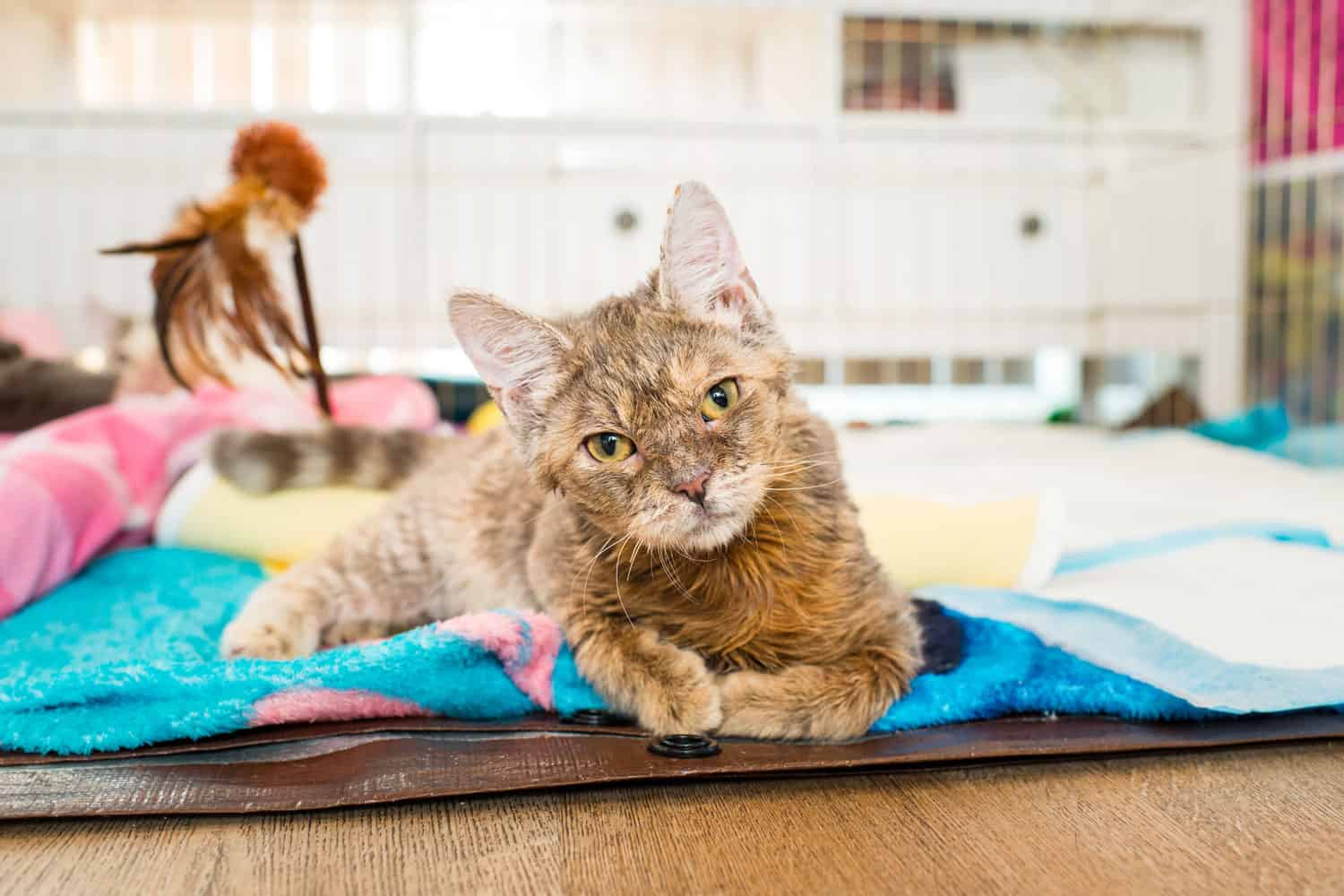
The cerebellum is the part of the brain that works with balance, coordination, and control of movements.
Cats can have varying degrees of balance and coordination problems if the cells do not mature normally before birth, especially when walking or jumping.
Pixie
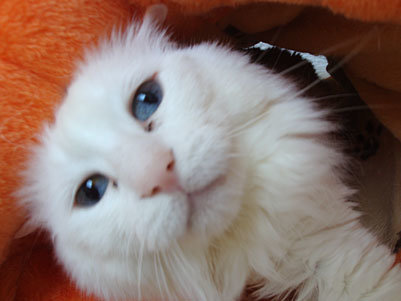
Given the options of keeping the kittens, adopting them to CH experienced owners or euthanizing them, Paulette decided to keep them. Pixie has the worst case. She is also deaf due to a genetic defect often found in white cats.
Although Pixie can pull herself from place to place, her legs will not support a walk to the litter box so she gets baths.
Pixie does not like baths. Paulette keeps Pixie on washable medical-grade absorbency pads. Pixie has learned to yell (loudly!) when the pads need to be changed. With little control over her neck muscles,
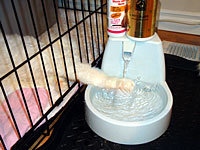
Pixie had trouble drinking from a bowl. A rabbit’s water bottle would let her drink, drop by drop. Pixie bypassed that and created her own solution.
She pulls herself to the cat’s communal water fountain, sticks a paw in, and splashes. She then drinks from her paw or the puddles she’s created. In Pixie’s mind, getting wet while drinking differs from getting wet while bathing.
SIGN UP FOR THECATSITE'S EMAIL UPDATES >
Egypt
When first seen, the emaciated cat, mostly skin, bone, and ears, reminded Buffy Martin Tarbox of the art pictures she’d seen of Egyptian cats.
Told the cat wouldn’t live to be a year old due to CH, Buffy adopted her anyway and was determined to make the most of their time together.
She named the cat Egypt who fooled everybody and lived to be fourteen years old. Egypt could walk but used puppy training pads since her back legs wouldn’t support climbing into a litter box.
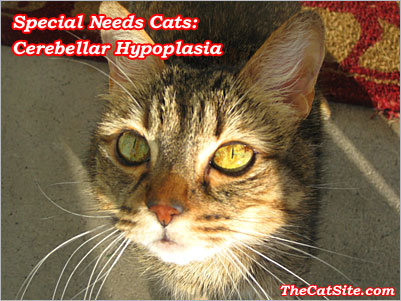
Egypt couldn’t jump but meowed when she wanted to be lifted onto the couch or bed. Her sweet disposition overcame her disability.
Buffy says, “Whenever she would fall down, which was often, Egypt always found a way to get herself back up. We will definitely consider another special needs cat.
Egypt taught me that no matter what happens in life, you always can find ways to pick yourself up and move ahead.”
Floppy Cat
If you’ve watched a toddler learn to walk, you’ve seen the bow-legged stance they take to keep their balance as they take off at high speeds.
Floppy Cat did the same thing. With all four legs splayed out wide for a better center of gravity, tail straight up to act as a rudder, FC would head in the direction he wanted to go—and weave and wobble his way, zig-zagging along, toppling over now and again, but getting there in the end.
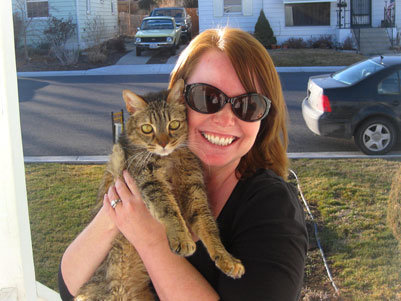
Floppy Cat’s person, Kari Kay, wrote a children’s book about his adventures. FC teaches children that different is not a bad thing—it’s just different.
Adopting a CH Cat
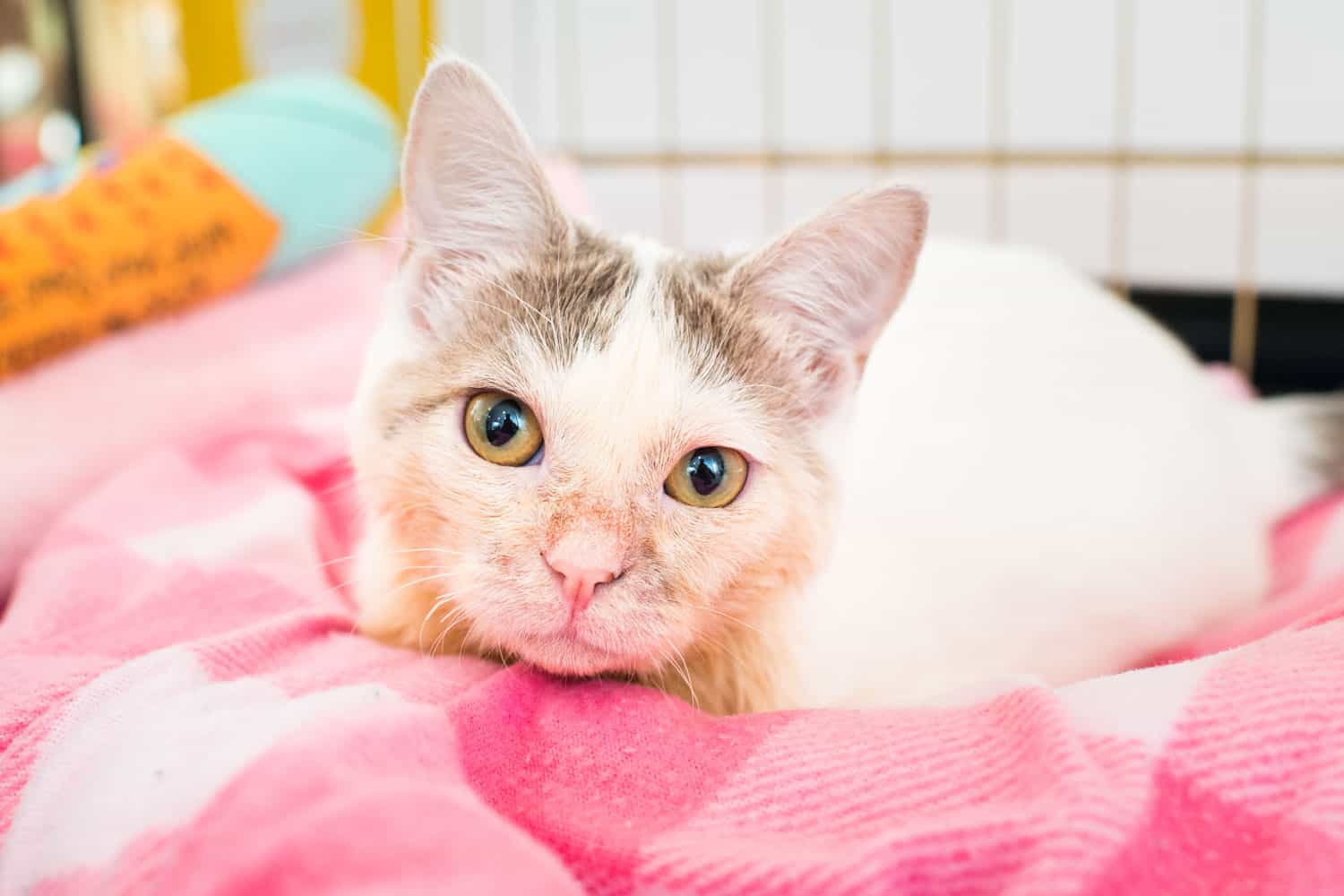
If you’re considering adopting a cat with CH, keep these things in mind—there are varying degrees of coordination and balance difficulties with this disease, some adjustments will need to be made like a litter box with a low entry or the use of pads, and most importantly, CH does not affect the personality of the cat.
Cats are remarkably adaptable and, given a chance, will prove different is not a bad thing, it’s just different.
SIGN UP FOR THECATSITE'S EMAIL UPDATES >
Comments? Leave them using the form below. Questions? Please use the cat forums for those!
Note: We may get commissions for purchases made through links on this page.


7 comments on “Special Needs Cats: Cerebellar Hypoplasia”