
Welcome to our guide on premature kittens. This guide is for those who stumble upon these tiny, fragile lives and choose to help them survive.
We'll help you identify a premature kitten by its distinct signs, like extremely low weight and small body size. Despite their challenging start, we'll show you that these kittens can still thrive with the right care.
We'll explain their slow growth, special feeding requirements, and unique health considerations. You'll also discover the essential role of warmth, touch, and gentle stimulation in their survival and development.
By the end, you'll be better equipped to navigate the rewarding but complex task of caring for these little fighters. So let's get started and learn more about these small miracles of resilience.
Caring For Premature Kittens: A Survival Guide
Discovering an orphaned or abandoned kitten, and deciding to hand-raise the little one can be a rewarding, yet daunting undertaking. Finding out that the kitten may be premature can leave you feeling even more anxious and wondering whether you'll be able to care for this tiny, fragile being.
SIGN UP FOR THECATSITE'S EMAIL UPDATES >
Identifying A Premature Kitten: Key Signs To Look For
Recognizing a premature kitten involves paying attention to several telling signs:
Weight: First, consider the weight. A kitten born full-term usually weighs between 3.3-3.7 ounces (91-105 grams). If the weight dips below roughly 3.1 ounces (87 grams), it may indicate low birth weight, typical in premature kittens. Some premature kittens, although rare, can weigh as little as 2 ounces (57 grams).
Body Size: Next, notice the body size. Premature kittens tend to be remarkably small.
Skin: Observe the skin. If it's wrinkled, it's another sign of premature birth.
Fur: Examine the fur. Sparse or no fur on the chest, abdomen, legs, and even sometimes on the entire body can indicate premature birth.
Behavior: Lastly, observe the kitten's behavior. If the kitten struggles to hold up its head or crawl, it could be premature. Keep these signs in mind as they can help accurately identify a premature kitten and provide it with the necessary care.
The Survival Prospects Of Premature Kittens
The question is, can a premature kitten survive? The answer is, yes, there is potential for a premature kitten to survive with meticulous, hands-on care.
However, it's important to note that this journey can be arduous and emotionally demanding. These kittens are faced with disadvantages from the moment they enter the world.
The task of caring for these delicate creatures is indeed challenging. Sadly, despite the best efforts, many premature kittens don't make it.
Yet, with patience, devotion, and an understanding of their unique needs, successfully raising a premature kitten is not an impossibility.
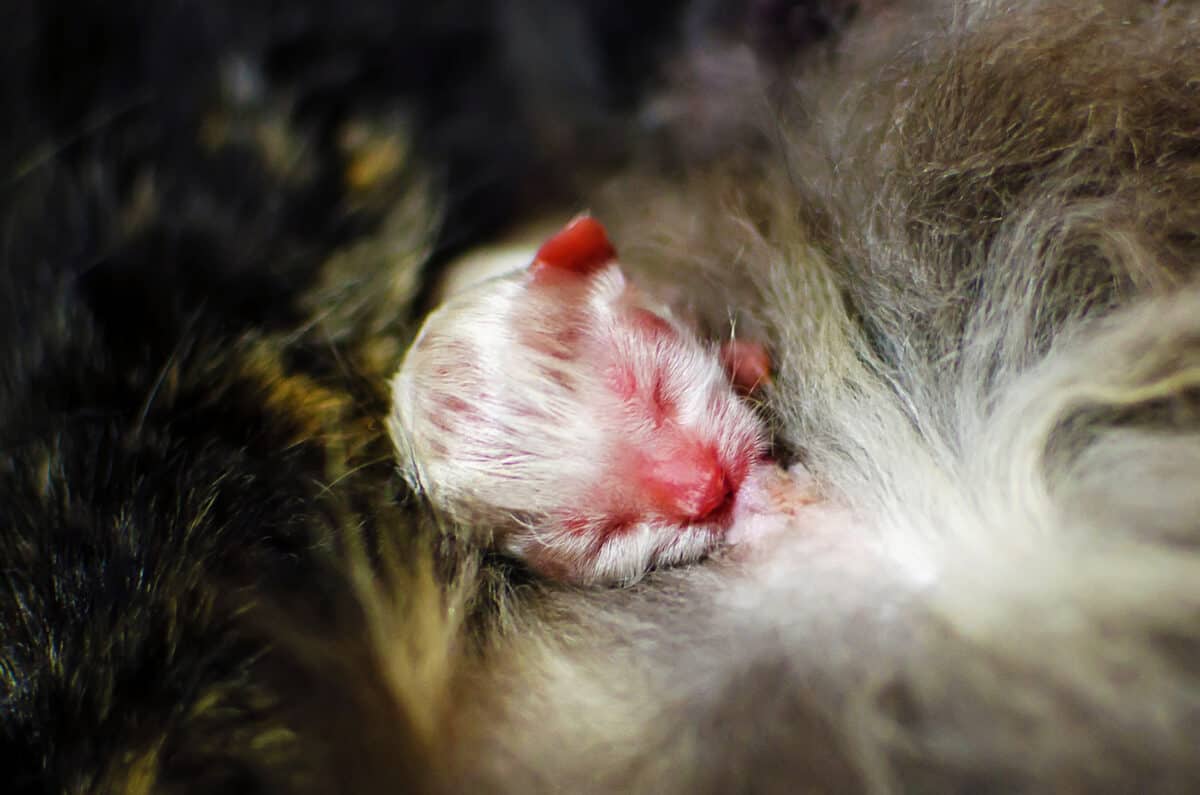
Understanding The Unique Characteristics Of Premature Kittens
What is different about premature kittens? First and foremost, these kittens are inherently fragile and have a heightened susceptibility to infection.
Their growth and development pace is more gradual compared to their full-term counterparts, meaning they take more time to hit significant milestones like opening their eyes, sitting up, and walking. Additionally, premature kittens require a warmer environment than full-term kittens.
An important factor is their internal organ development - it's often incomplete. They haven't had the full term in the safety of their mother's womb to fully develop.
This incomplete development is particularly evident in their digestive system, making digesting food and having bowel movements challenging for these tiny kittens. Hence, caring for premature kittens involves understanding and adapting to these unique needs.
Providing Essential Care For Premature Kittens
How Do I Care For A Premature Kitten?
When it comes to caring for a premature kitten, you'll need to do more than the standard care for newborn kittens. Keep in mind, every day a kitten is born prematurely equates to a week for a premature human baby.
This means, for instance, a kitten that arrives 10 days early is akin to a human baby being born at 30 weeks - 10 weeks ahead of time. It's essential to understand this equivalence to provide the best care and handle the unique needs of your premature kitten.
Maintaining Ideal Warmth
Premature kittens require warmer environments compared to full-term kittens:
From Birth to 3 weeks: Maintain 95 degrees (35oC)
From 3-4 weeks: Keep it at 85 degrees (30oC)
Over 4 weeks: Stick to 80 degrees (27oC)
Ensuring adequate hydration is essential due to these warmer conditions. Administer 1 ml of boiled, cooled water post every feed using a needleless syringe, taking care to feed slowly. Increase this amount to 1½ ml at 10 days.
Feeding Regimen
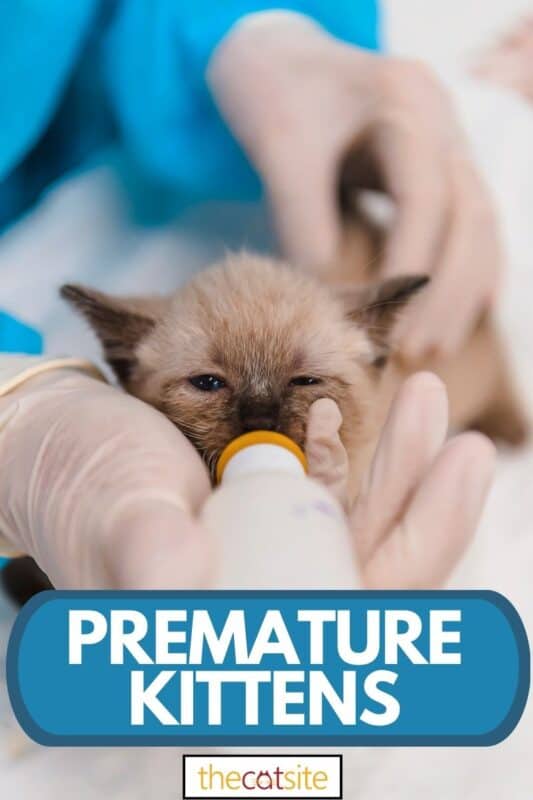
In the first week to ten days of life, a premature kitten needs feeding every 1-2 hours. This schedule might be exhausting, but it's the only way to ensure the kitten gets the nutrition it requires.
Dilute the kitten's formula, as its developing digestive system can't handle full-strength formula yet.
Prepare the formula as per the instructions, then add an additional ¼ amount of boiled, cooled water for dilution. Initially, the kitten will consume only 1-2 ml per feed due to its small stomach capacity. Gradually, it will start consuming more as it grows.
Bear in mind, premature kittens are often too weak to feed or might not have learned to swallow yet.
Guidance For Elimination
Premature kittens sometimes experience problems having bowel motions, as their bowels are often underdeveloped and uncoordinated. Just as with full-term kittens, premature kittens should have a bowel motion at least once every two days.
Sometimes, even a cotton ball can be too rough for the delicate skin around his bottom. Instead, get a small stream of warm water going at the sink, place his bottom in the stream, and using your other hand, stimulate him with the index finger. Make sure your nails are short.
Sometimes kittens will not produce a bowel motion if they feel that the cotton ball or tissue you are using is too harsh on their bottom. Your finger is the softest thing you can use to stimulate him. Dry him well and make sure he doesn’t become chilled.
If the kitten becomes restless and cranky or his abdomen looks distended or bloated, he may be constipated. Go to this link and follow the advice on what to do if your kitten is constipated.
You can also use a massage technique to try and get his bowels moving. After a feed, lay him on his back and gently massage his abdomen in small circles with your thumbs. Massage his tummy and sides, right up near his spine.
What you're doing is mimicking the peristaltic (wave-like) motion that the stomach and bowels use to move the food along. You need to do this for as long as he'll let you. Make sure you massage close to his anus with your thumbs so it begins to connect with the messages from the bowels.
Finally, take his little back legs and alternately straighten and bend each one in a cycling motion.
If the kitten still doesn’t have a bowel motion, he needs to see a vet. The vet can give the kitten an enema, which is often a successful way of relieving the blockage. Some kittens will need several enemas until their bowels start working properly. Never try to give the kitten an enema yourself.
The Power Of Touch
Touch is an important factor in the development of all kittens and is especially important for premature kittens. Remain serene and calm around the kitten, as he will pick up on any anxiety you are feeling and it may translate into anxiety or illness in him.
He needs lots of physical contact with you, as gentle contact stimulates his mental and physical development and calms him.
A great way to keep an eye on him, as well as comfort him, is to use the Pouch Potato described on this page. Add a sock heater and he has a warm, safe place to be where he can be close to you.
SIGN UP FOR THECATSITE'S EMAIL UPDATES >
The Rewarding Journey Of Raising A Premature Kitten
In conclusion, caring for premature kittens requires dedication, patience, and a comprehensive understanding of their unique needs. These tiny beings have a tough start in life, with their underdeveloped systems and heightened vulnerability to infections.
Nevertheless, with meticulous attention to warmth, feeding, elimination, and gentle touch, you can enhance their chances of survival and growth. Remember, your commitment can make a significant difference in their lives, turning these fragile lives into flourishing felines.
Written by Tania Waterhouse
Tania Waterhouse lives in Perth, Western Australia. She specializes in rescuing orphaned kittens.
Comments? Leave them using the form below. Questions? Please use the cat forums for those!
You might also like:
7 Crucial Tips for Safely Bathing Small Kittens
Weaning: How To Get Your Kittens To Eat On Their Own
Note: We may get commissions for purchases made through links on this page.



9 comments on “Premature Kittens: The Comprehensive Guide To Care”