
As a cat owner, you probably know that you need to play with your cat. But are you doing it right? Is your cat getting all the benefits that playtime should give them?
After all, the feline behavior of playing has many benefits. Here's what your cat can get from playtime -
- Better health thanks to physical exercise
- Improved mental capabilities
- Reduced Boredom
- Overall reduced stress
As a bonus, a healthy, relaxed cat that gets enough stimulation during the day is also more likely not to wake you up at night. If that's an issue for you, don't forget to check out our article: How To Stop My Cat From Waking Me Up At Night.
So, how can you make sure Kitty is getting the most of playtime sessions? The key here is to make things more interactive by involving you - the owner. We have ten excellent tips that will help you make playing with your cat a success.
What is interactive playtime?
When you toss a simple stuffed toy for a cat to bat on its own, you're giving him "dead prey" to pounce on. No matter how expensive the toy, Kitty is likely to lose interest within a few minutes.
After all, there's not much you can do with an inedible "dead" mouse other than making sure it's really dead.
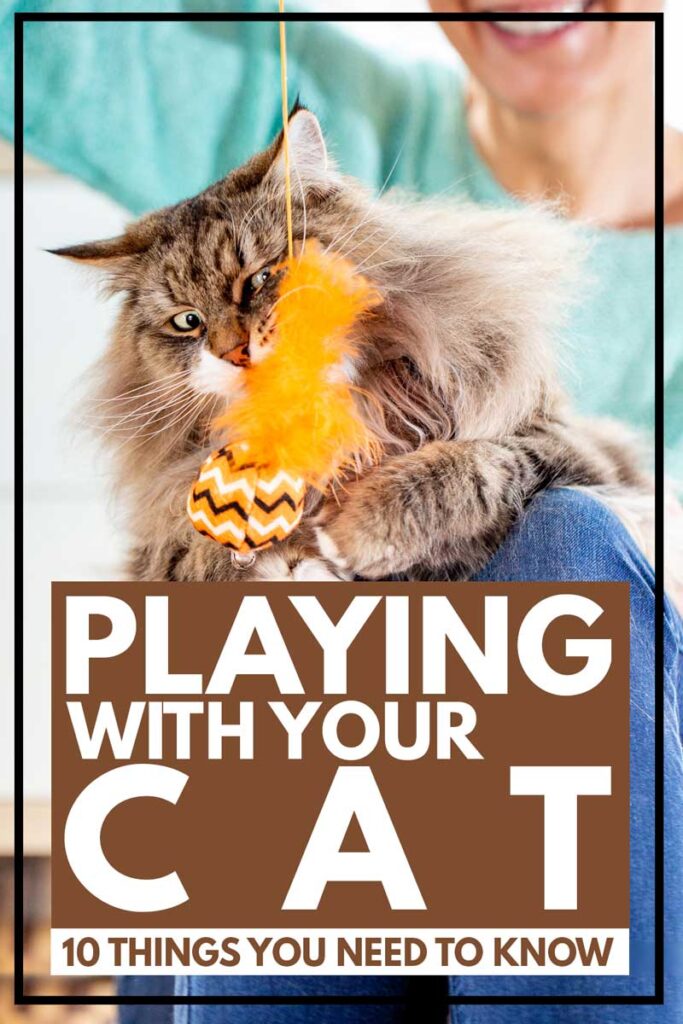
However, when you use a fishing-rod type toy (Amazon link) to play with your cat, you breathe life into the toy by moving it around. You are, in fact, creating a good simulation of actual hunting, where the prey runs, hides and darts about. Much more interesting for your cat! To make the most of this precious interaction, here are a few things you need to keep in mind -

Click to see this fishing rod toy on Amazon
1. Create the right setting.
Interactive playtime is a form of role-playing. Your cat's role is that of The Hunter. Your role - via the toy - is that of The Prey.
Don't play on an empty stage, though. Make sure there are props around - furniture, pillows, boxes, and bags all make good make-believe rocks, tree stumps, and grass for prey and predator to hide behind.
2. Imitate the prey's behavior.
Play your role correctly. Decide if the toy at the end of the string is a mouse, a bird, or perhaps a small lizard or fish.
Get into the role and make the toy move accordingly. If it's a mouse you're playing, it should run by walls and objects, hide occasionally, freeze if it sees the cat, then run away from it (never in the direction of the cat).
If you're playing a bird, have the toy "flutter" around, flying into the air occasionally. Don't forget to be the kind of bird that walks on the ground a lot, perhaps pecking for food. After all, no cat will chase a bird as it flies high up in the sky.
3. Don't frustrate your cat.
You want the game to be fun and satisfying. Don't just wave the toy high up where Kitty can never reach it.
Allow the "bird" to land often, and don't let the mouse always "outrun" the cat. Now and again, allow your cat to catch the toy and hold it in his mouth and paws.
4. Don't exhaust your cat.
Exercise is one of your goals, but it doesn't mean Kitty needs to get to the point where she's panting or heaving. It rarely happens during real hunting sessions either, where most of the time is spent stalking prey and planning the attack.
Remember, exercise means a mental exercise, not just physical activity.
5. Warm up - play - cool down.
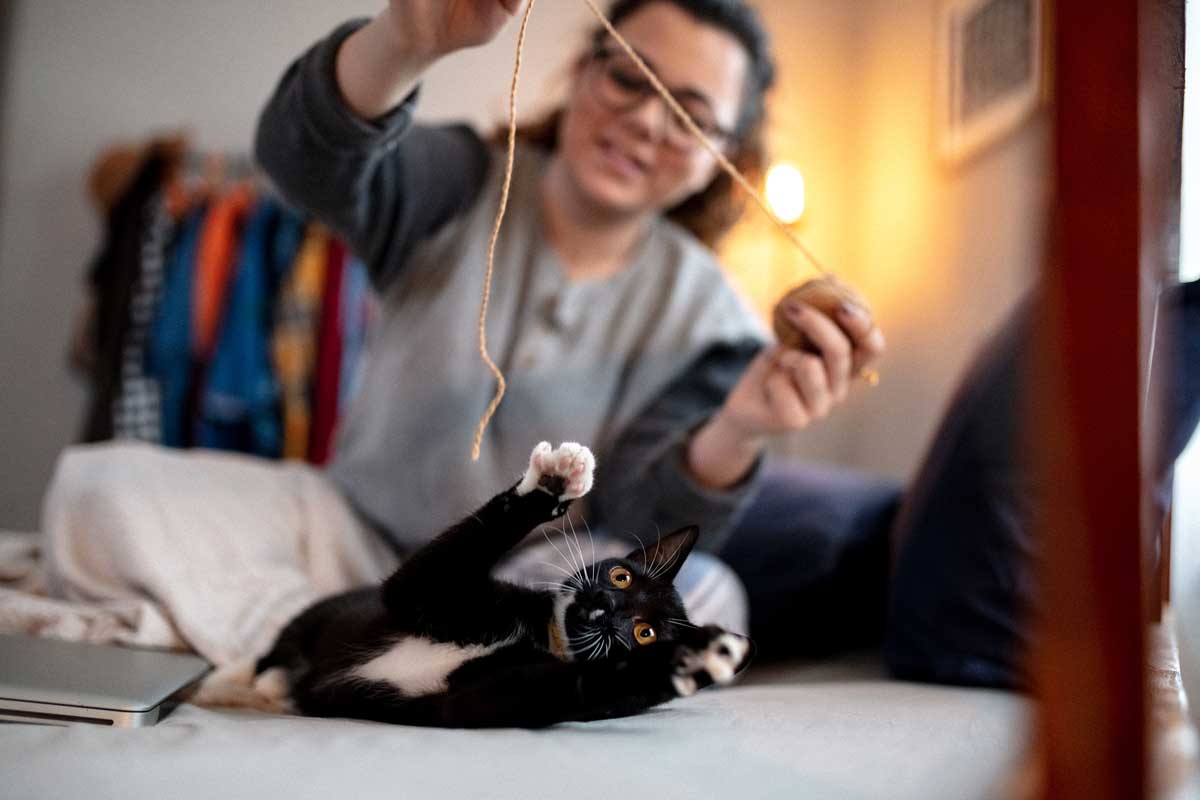
Just like with your Pilates or running workouts, keep playing time reasonable and safe.
Begin with slow movements, gradually work your way up to the wild chases and eventually wrap the session up with slower playing motions again. It's healthier for your cat's body.
6. Set up a daily schedule.
Cats are creatures of habit. If they know that playtime is always in the evening or morning, they'll be more likely to be awake and active for it.
Two play sessions a day is excellent. If you can only manage one, it's best to carry it out during the evening to make sure Kitty is tired and relaxed during nighttime.
In fact, interactive playtime in the evening is a tool of behavioral therapy. Read more about how to stop your cat from waking you up at night.
SIGN UP FOR THECATSITE'S EMAIL UPDATES >
7. More than one cat? Play separately.
Cats are not lionesses and don't hunt in groups.
If you try to operate your "mouse" when there's more than one cat in the room, you will probably only get one cat actively involved (usually the younger cat or the more dominant one), with the other cats playing the role of spectators.
It's not good for them, as they can become excited by the visual stimuli, yet with no place to release the pent-up tension, they end up being more stressed than before.
If you have more than one cat, you should have a separate play session for each cat and carry that out in a different room where you two will be alone.
8. Feed after playing.
A good hunt should end with a meal. Don't add calories to Kitty's daily diet but do keep a few spoonfuls worth of his regular food to be served out after playtime.
A play session is also a good time for dishing out treats to the successful hunter. It increases your cat's satisfaction, and once the meal is consumed, they are likely to find a nice spot and get some sleep.
9. Keep your fingers out of the way.
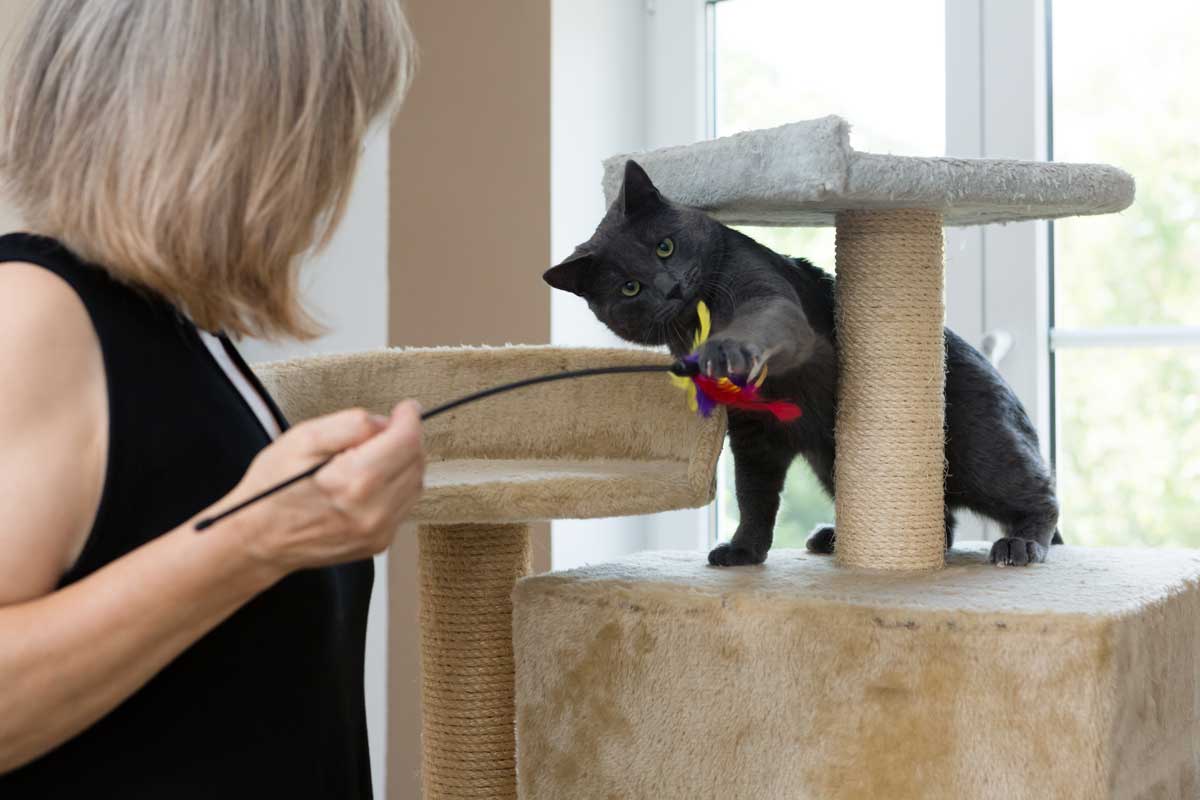
One of the advantages of using a fishing-rod type of toy is that your fingers and hands are safe from claws and teeth.
If you choose to mimic a prey's movements using a small toy on a string, make sure the string is long enough, so Kitty doesn't end up preying on your fingers!
10. Play throughout the cat's life.
It's easy to get a kitten to play, but older cats may be more sedentary. This doesn't mean they shouldn't enjoy interactive playtime sessions.
Quite the contrary! These are cats that could benefit most from the physical and mental stimulation the game offers.
Find a toy that gets your cat interested, apply the principles above, and stick to a schedule. If Kitty appears reluctant to play for long, don't push it. Start with a minute of playtime and work your way gradually up to 10-15 minute sessions.
Cats benefit hugely from interactive playtime - when done right! It helps beat boredom, reduces stress, and provides physical and mental exercise for Kitty while at the same time cementing the special bond between humans and felines.
Need more help? Post your questions about cat play in the cat behavior forum where experienced cat owners can help you out.
SIGN UP FOR THECATSITE'S EMAIL UPDATES >
Note: We may get commissions for purchases made through links on this page.


33 comments on “Playing With Your Cat – 10 Things You Need To Know”